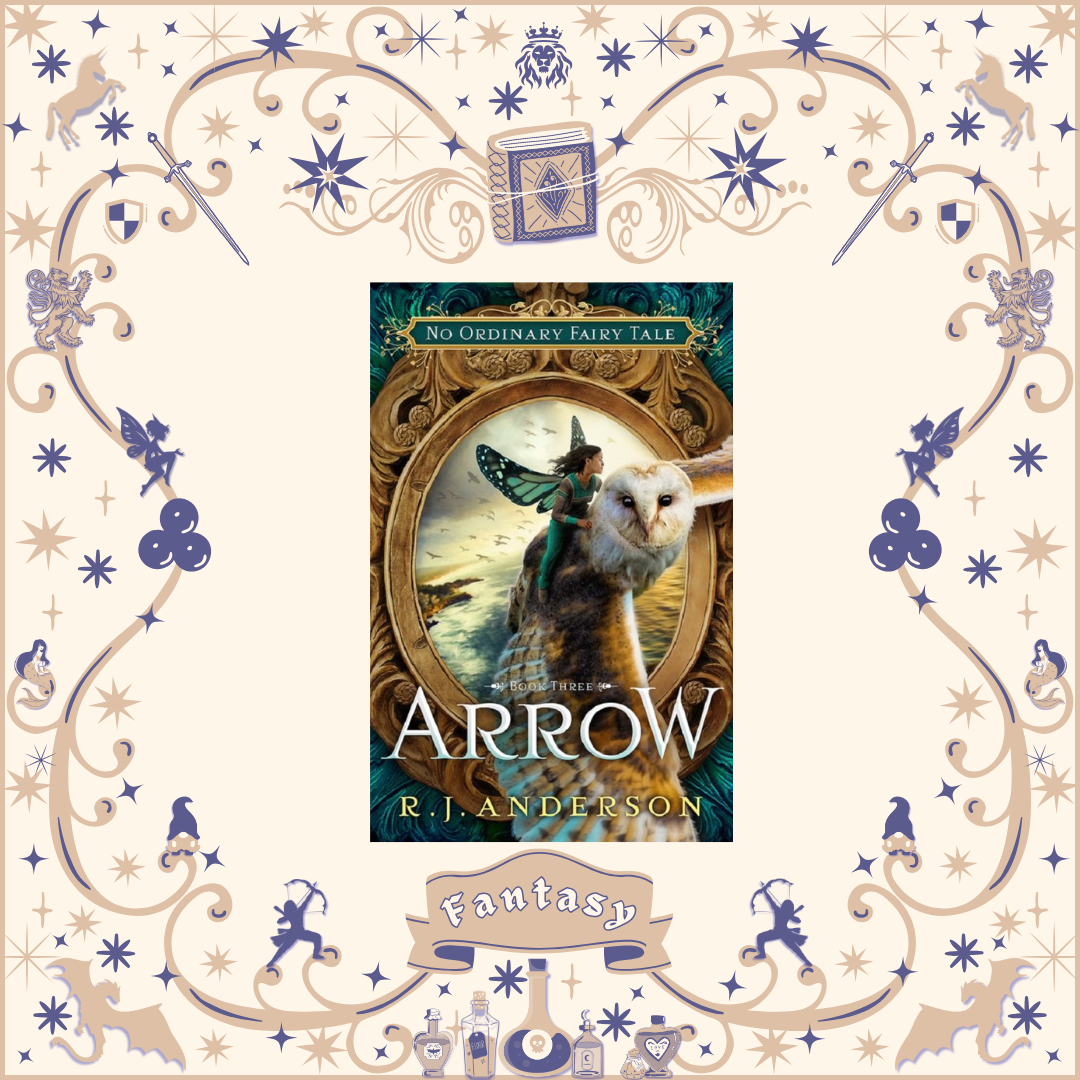
Arrow by R.J. Anderson
Arrow by R.J. Anderson
Book 3 of No Ordinary Fairy Tale
Summary:
She swore never to shed blood in violence, no matter how grave the danger. But when a faery war threatens her home, the price of peace may be higher than Rhosmari can pay…
For a thousand years the faeries known as the Children of Rhys have lived in safety on their magical islands, protected from the evils of the outside world. Yet a deadly conflict is brewing on the mainland, as the evil faery Empress gathers an army to destroy the brave rebels known as the Oakenfolk. And when Rhosmari's betrothed Garan steals the sacred Stone of Naming and runs off to help the rebels, she realizes that the only way to keep the Children of Rhys out of the war is to go after him and get the Stone back.
But the world beyond the Green Isles is stranger and more confusing than Rhosmari ever imagined, and Garan and his fellow rebels are not easy to find. Every step she takes leads her deeper into danger, testing her courage, trust, and even the beliefs she holds most dear. If she refuses to fight the Empress, she could end up dooming the whole rebel army… but if she breaks her oath of non-violence, she can never return to her beloved home and people again. Can her new faery and human allies help Rhosmari choose the right path, or will she only end up pointing them all toward destruction?
Opening Lines:
"Faeries of the Oak," said Rob, "we are at war."
The young rebel leader paced the dais, torchlight glinting in his dark eyes and turning his fox-colored hair to flame. Above him soared the high ceiling of the Queen's Hall, braced by the roots of the living Oak, while below and before him the great chamber was crowded with faeries.
There must have been two hundred of Rob's followers standing or leaning or even sitting at the back of the room, looking almost human in their modern clothes. After them came the upright but markedly smaller group of the Children of Rhys--Garan and his men from the magical Green Isles of Wales, who could have been extras from a Robin Hood film. But at the front of the crowd stood forty or so females dressed in simple, homespun clothing of a style that had not been popular since Jane Austen.
It was to this last group that Rob was speaking.
Couldn't load pickup availability
Share